.svg)
.png)


.png)

Shop
Take home a piece of the festival

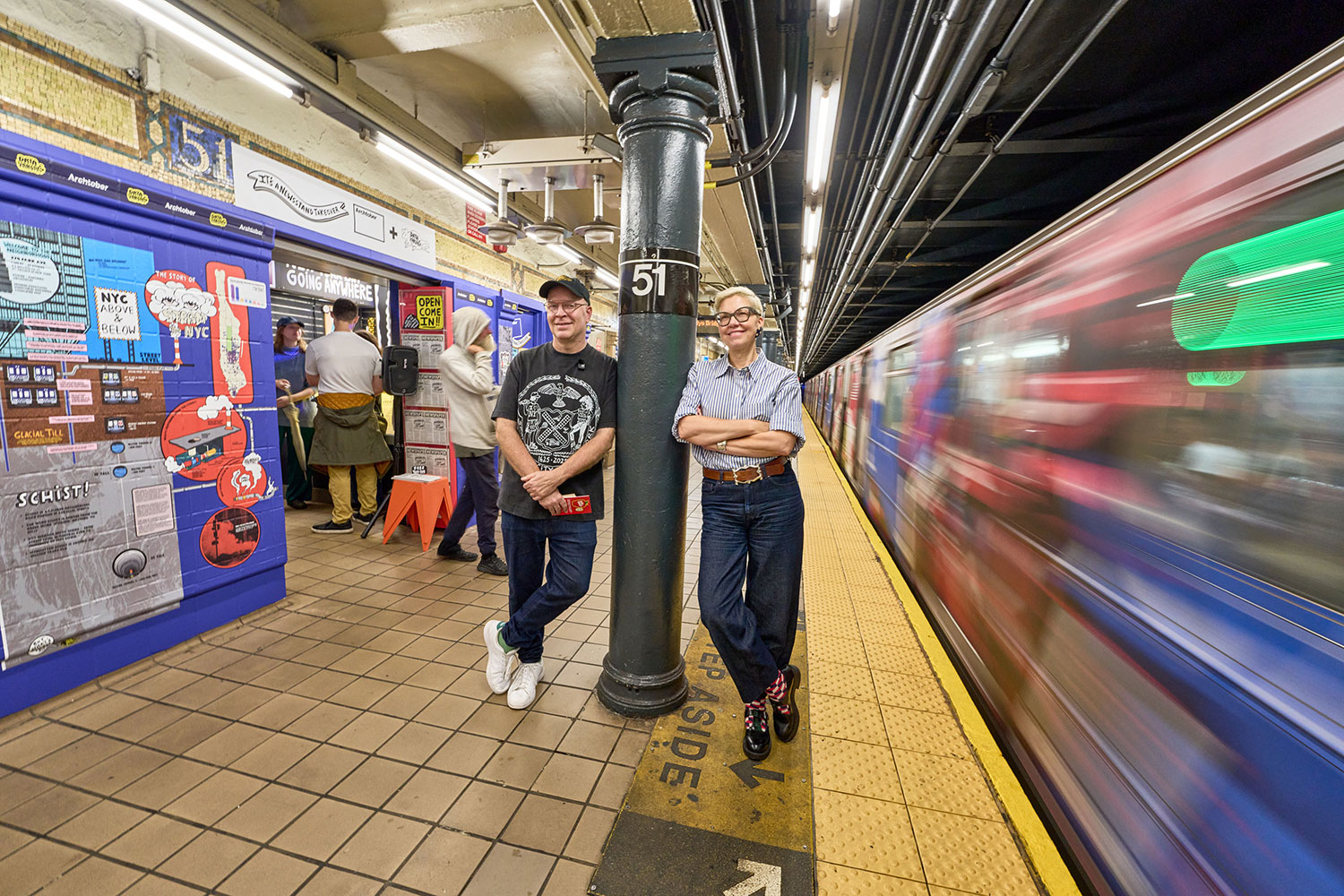
Ahead of their exhibition at the Center for Architecture in Janurary 2027, the duo behind Figures of Architecture gives you an inside look at their work. This Archtober, they want your grotesque.

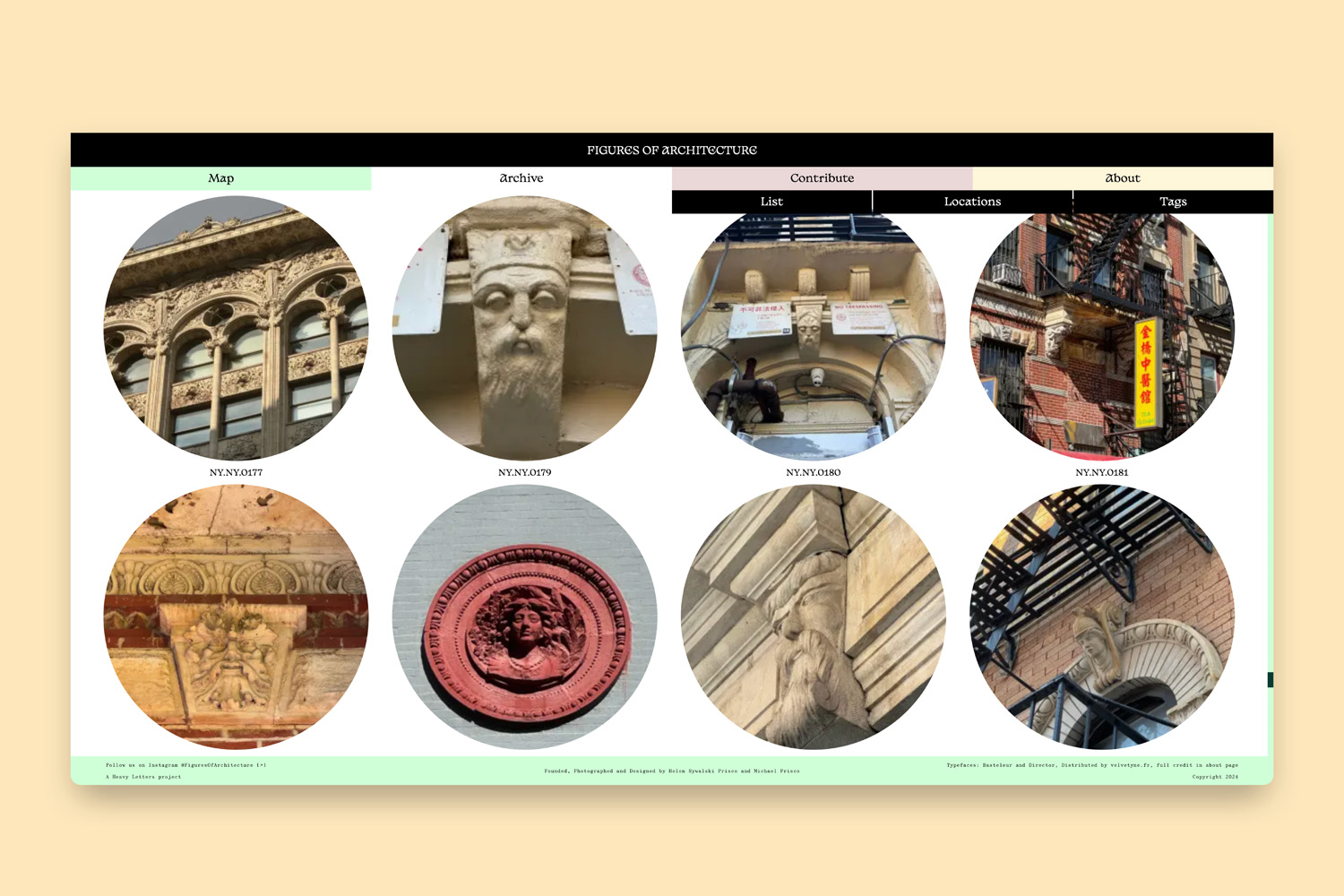
What started as taking a few photos on pandemic-era walks around Prospect Park and on strolls to pick up a favorite pastry grew into Figures of Architecture, an open archive of architectural grotesques, mascarons, and ornamentation. Helen Sywalski Prisco and Michael Prisco had always loved exploring cities on foot, and once they started noticing the faces hidden in New York’s architecture, they began seeing them everywhere. Soon, they were seeking them out on walks around the city and photographing them wherever they traveled.
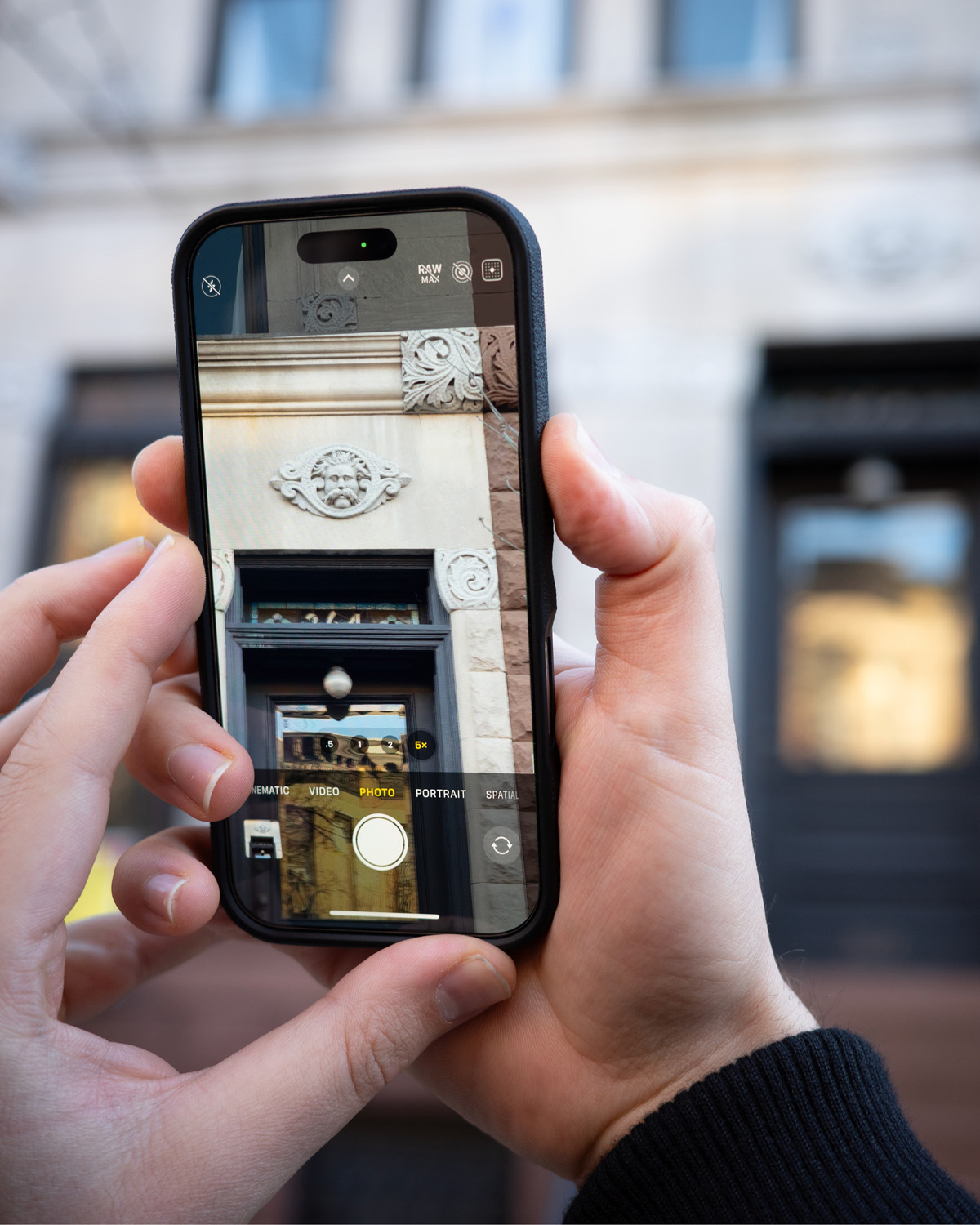
From gargoyles and green men to disgorging heads, stone spies, monstrous hybrids, and chimeras, the digital archive launched with over 500 entries and 2,000 supporting images spanning seven cities and three countries. Each entry is accessioned, plotted, and tagged, allowing users to filter by location and keyword to explore similarities, differences, and unexpected details, from the grand buildings typically associated with ornamentation to the single-family homes you pass every day.
Designed as a citizen research project, the archive welcomes contributions from collaborators, with dedicated credit for contributors and a framework that encourages organic growth. It aims to serve as both a resource and an inspiration, fostering collaboration, shared interest, and perhaps a new grotesque for the 21st century.
Helen and Michael’s multidisciplinary backgrounds in graphic design, sculpture, and spatial design, with much of their professional work developed in collaboration with architects, museums, cultural institutions, and their collections, led them to wonder where the archive could go next. How could people experience these incredibly unique faces together in one place? And how could they move beyond photographic documentation?
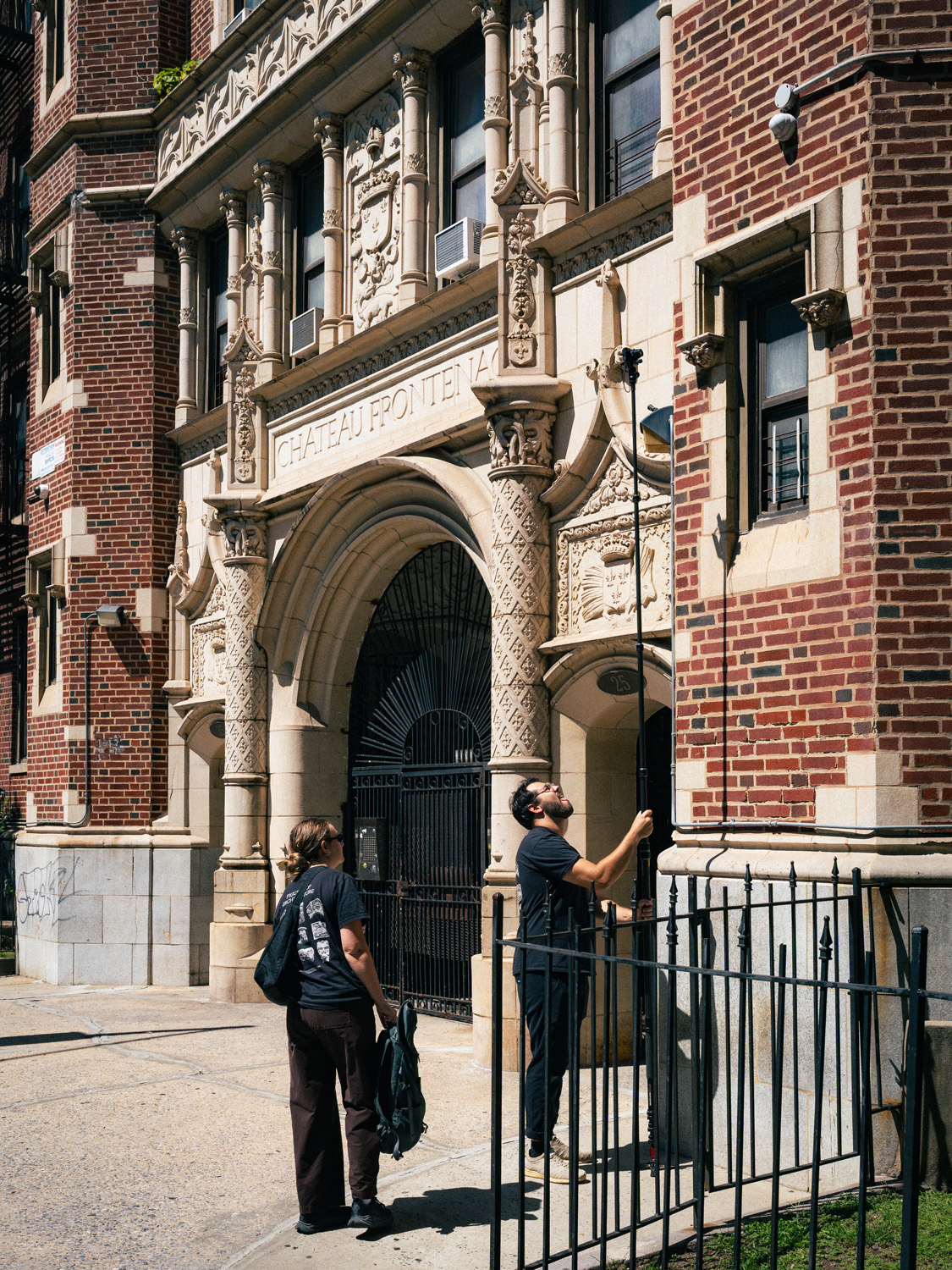
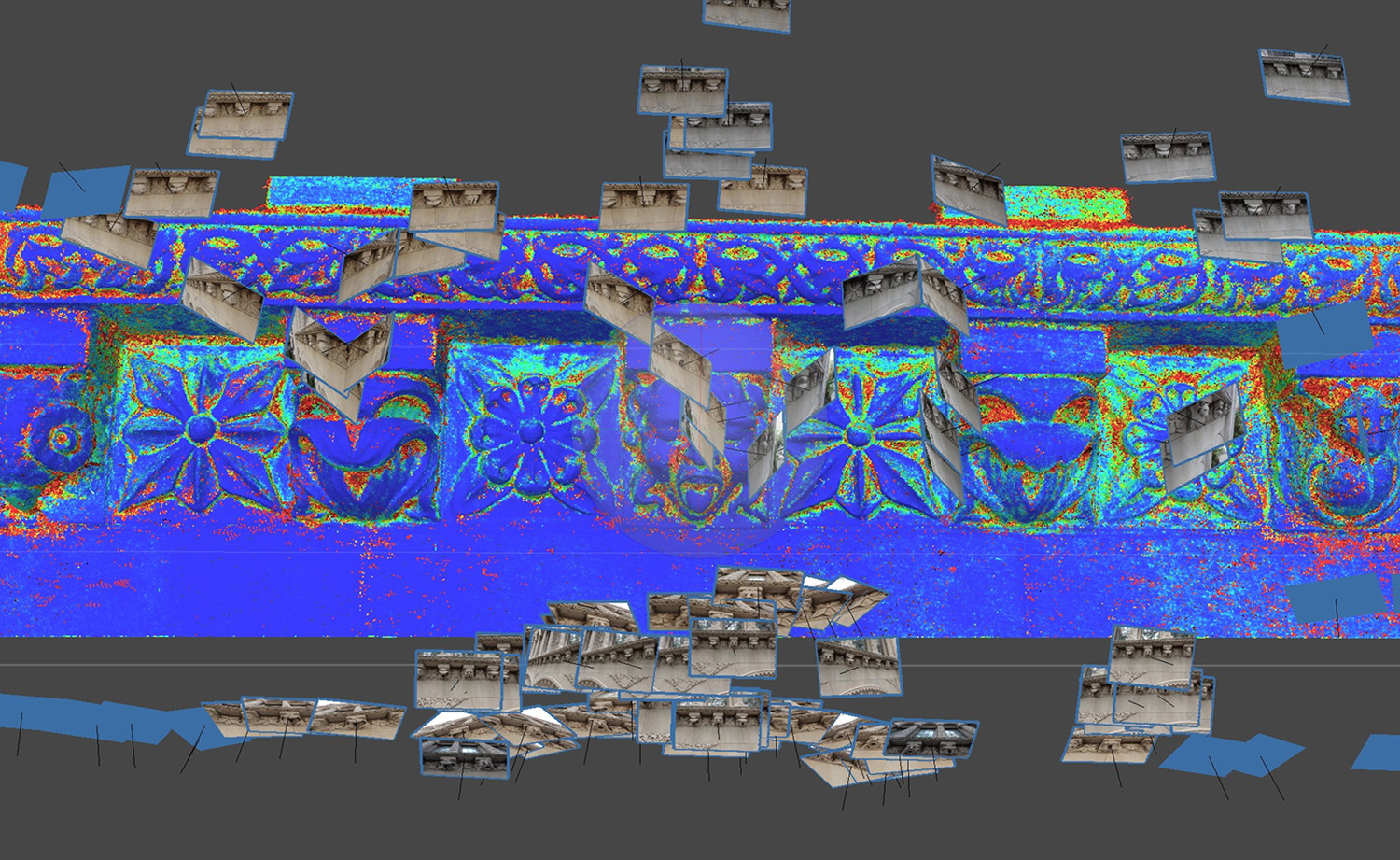
In the next phase of the project, they began transforming their photographic documentation into high-resolution digital twins and physical models, expanding the archive into a digital preservation toolkit and material repository. Their initial work focuses on ornaments accessible from ground level up to roughly 20 feet, a practical limit set by the tallest telescoping boom and tripod they could find. Using this setup, they capture dozens of high-resolution photographs of each figure from different angles, which are then compiled using photogrammetry software to generate a detailed 3D model. Each model is cleaned up and prepared for 3D printing and fabrication, sharing with researchers, students, fabricators and craftspeople, and viewing through an interactive in-browser viewer (launching soon).
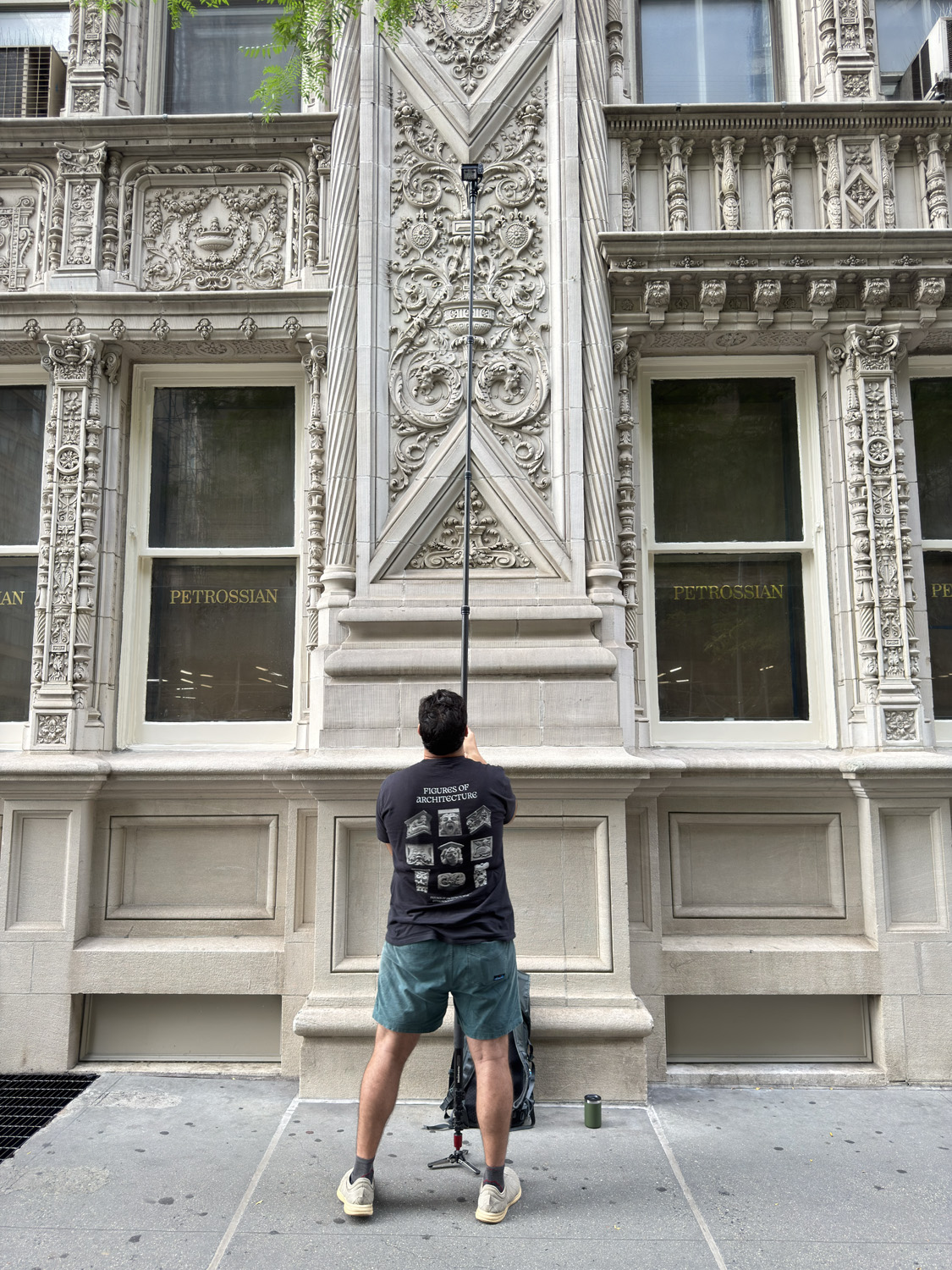
For Helen and Michael, one of the most rewarding parts of the process has been meeting people and talking about these faces. While documenting, they’ve spoken with residents of the buildings they’ve scanned—some who already have a deep affection for the faces that inhabit their homes, and others who had hardly noticed them before—as well as master stone carvers, preservationists, curators, and others who share their fascination with architectural ornament. Along the way, they’ve enjoyed diving deeper into the histories of the buildings and their ornamentation, the craftspeople who made them who so often remain unknown, and the people who came before them who laid the groundwork for appreciating and preserving these figures.
Experience the archive, in-person, in Figures of Architecture: A Living Archive of Grotesques and Mascaron Ornamentation, the forthcoming exhibition by Helen Sywalski Prisco and Michael Prisco opening at the Center for Architecture on January 14, 2027.
Ahead of the exhibition, the Center for Architecture is hosting an open call for both modern interpretations of the architectural grotesque and examples that already exist. Submit your entry by October 23, 2026.


Archtober is a NYC-based platform that promotes the discovery of architecture and design through experiences and content, culminating in a month-long festival every October.