.svg)
.png)


.png)

Shop
Take home a piece of the festival

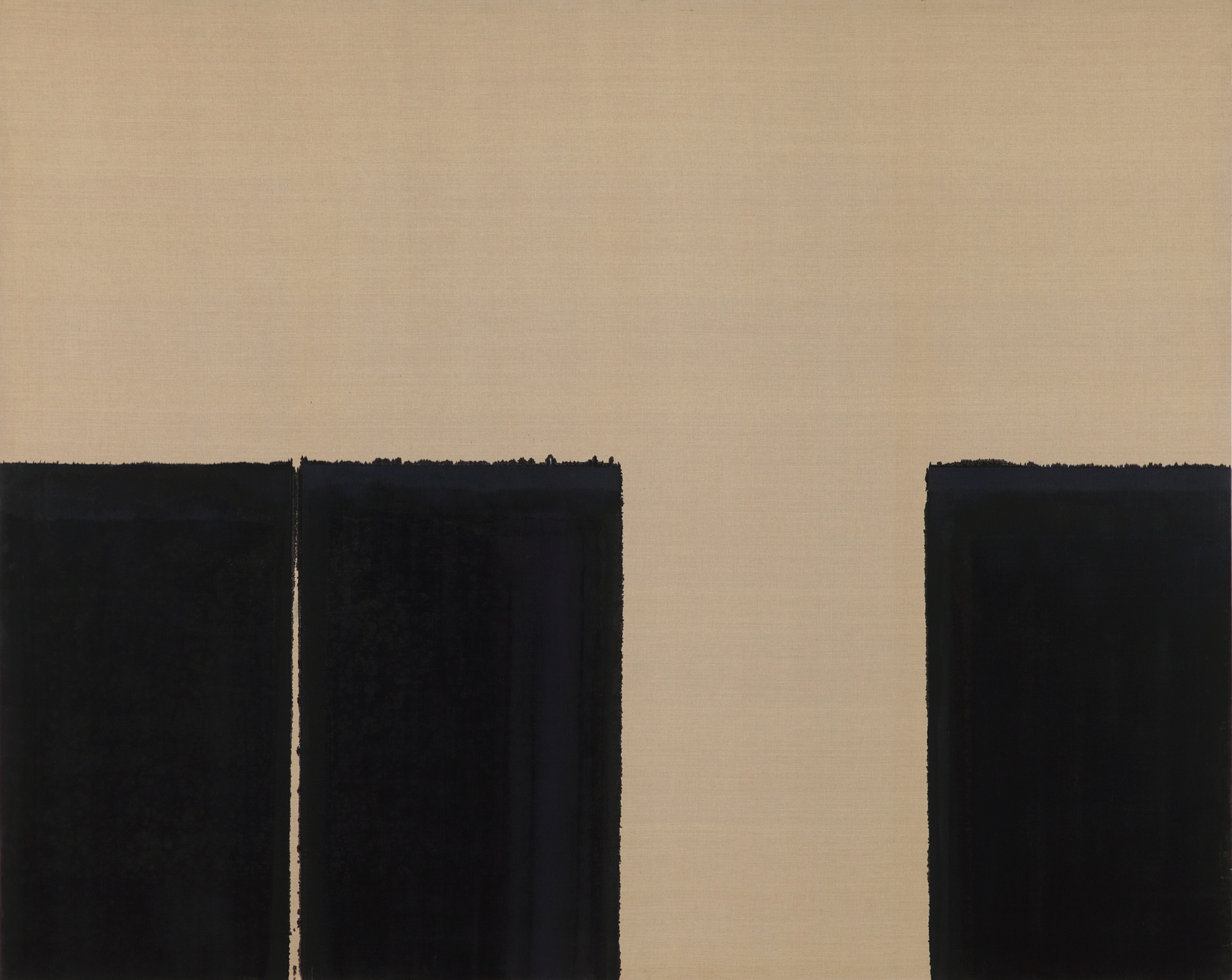
Judd Foundation presents Yun Hyong-keun, an exhibition of paintings by Yun Hyong-keun at 101 Spring Street in New York. The exhibition reconstructs Hyong-keun Yun 1993, one of the artist’s first solo exhibitions in the United States, organized by Donald Judd and Locks Gallery. Yun Hyong-keun is presented in recognition of the public opening of the Yun Hyong-keun House and organized in partnership with the Estate of Yun Hyong-keun.
Yun Hyong-keun (1928–2007) is one of the most important South Korean painters of the twentieth century. Beginning in the 1970s, Yun employed a technique of superimposing pigment and color on unprimed canvas. Later that decade, he began using ultramarine and umber as the sole colors in his paintings, soaking and spreading the paint directly on cloth or linen canvas. The initial brushstrokes determined the work’s composition: a single rectangle, a large area, or columns on either side of the canvas. Yun would then layer the pigment over many sessions, building up density and color. The paintings would vary depending on the time allowed for the pigment to dry, the quality of the unprimed material of the canvas, and the quantity of oil used in the mixing of the paint. Some took years to complete.
Yun was primarily concerned with the colors of nature, specifically those found in the landscape that had a “discolored or decolorized
The first exhibition of Yun’s work at 101 Spring Street (November 14, 1993–January 15, 1994) consisted of six paintings selected by Yun and Judd. In Yun Hyong-keun, five of the original paintings are presented alongside another painting from the same series, made in the same year and of the same size, recalling the 1993 presentation. This exhibition ran concurrent with a presentation of seventeen paintings at Locks Gallery, Philadelphia (November 13–December 31, 1993). These marked the artist’s first solo exhibitions in the United States. Judd also organized an exhibition of Yun’s work at the Chinati Foundation in Marfa (1994–1995). Following Judd’s death in 1994, Yun donated three of the exhibited works to the Chinati Foundation.
Yun and Judd first met in 1991 in Seoul on the occasion of Judd’s first exhibition in South Korea. They shared a deep understanding of and respect for nature and existing things, including art, functional objects, and architecture. The importance of simplicity and honesty in materials was fundamental to both of their lives and work. They were against the imposition of styles and aesthetics of convention and the obstruction of the given qualities of materials. Yun rejected categories and labels for his work, as did Judd, although he is usually associated with the Dansaekhwa movement. Notably, both worked during postwar periods in their respective home countries. The violence and the social and economic upheaval of the midcentury, as well as that of the early 1990s, impacted their work. As artists and citizens, they found themselves in opposition to the prevalent bureaucracies and the aggressions of military and commercial expansionism.
In September 2026, the Yun Hyong-keun House, in Seogyo-dong, South Korea, opened to the public for the first time. In 1983, Yun demolished the former house where he had lived since 1967 and supervised the planning and construction of a new building that became his home and studio. Yun lived and worked in the building for twenty years; it now contains the artist’s correspondence, diaries, photographs, and small works. Within the living space are works by Judd, along with archival traces of their exchange. Following the passing of Kim Youngsuk, Yun’s wife, in 2017, the artist’s family has been devoted to preserving the house with the intention of sharing the unity of the artist’s life and work as he envisioned it.
Yun Hyong-keun is part of Judd Foundation’s exhibition series in New York. Since 2015, the Foundation has organized exhibitions of works by Yuji Agematsu, Larry Bell, Rosemarie Castoro, John Chamberlain, Dan Flavin, Felix Gonzalez-Torres, Robert Irwin, Yayoi Kusama, Richard Long, David Novros, Pierre Paulin, James Rosenquist, Lauretta Vinciarelli, and Meg Webster. These exhibitions continue the historical use of the ground floor of 101 Spring Street as a public exhibition space by Judd beginning in the 1970s.

Archtober is a NYC-based platform that promotes the discovery of architecture and design through experiences and content, culminating in a month-long festival every October.


