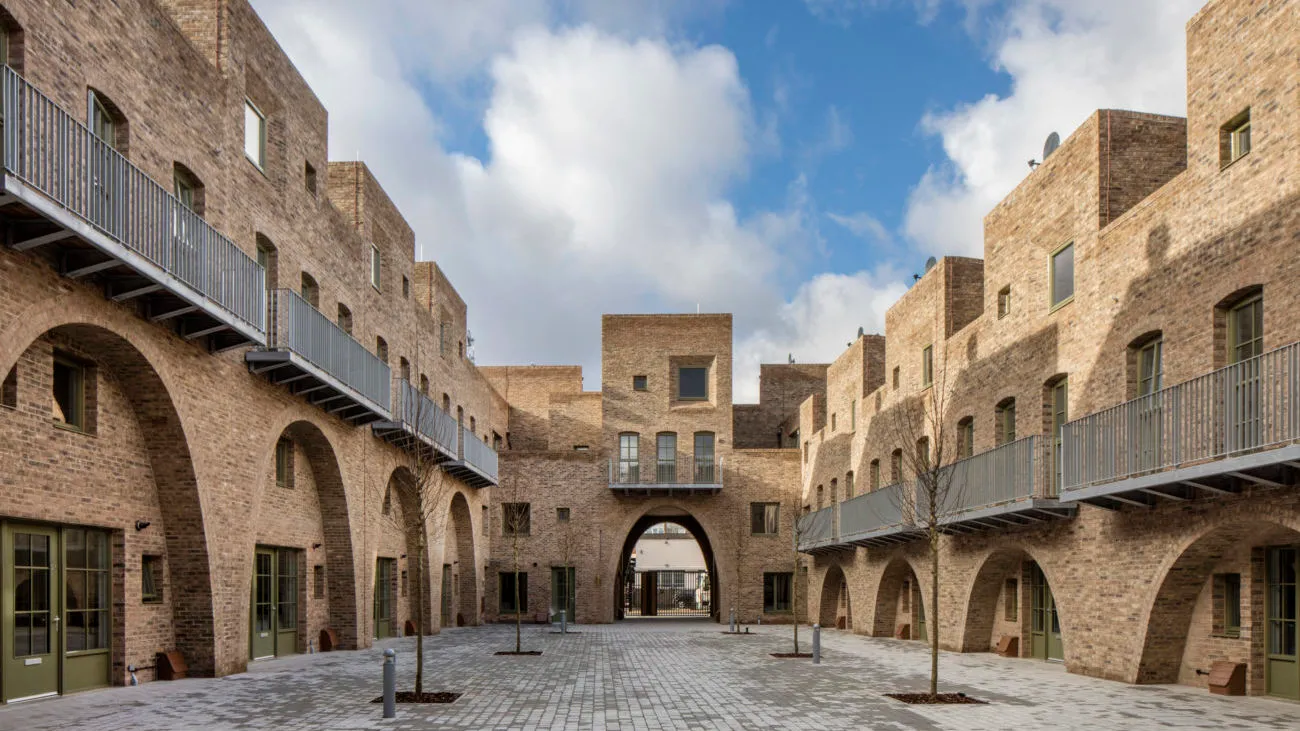
The Architectural League of New York's Current Work is a lecture series featuring leading figures in the worlds of architecture, urbanism, design, and art. This fall and early winter, Current Work spotlights influential and innovative design practices that bring widely varying perspectives to contemporary housing challenges. Peter Barber is the founder and director of Peter Barber Architects, a studio reshaping London’s approach to social housing. His residential projects “read as much as urban manifestos as homes,” according to Metropolis, offering provocative, humane responses to today’s compounded urban housing crises. Formally, his work revives a wide variety of historic spatial and stylistic typologies. As one critic recently observed, Barber achieves “a kind of militant, architectural evangelism, pushing boundaries of design, chivvying the political class and renegotiating housing’s wider social contract with the city.”
The Architectural League of New York's Current Work is a lecture series featuring leading figures in the worlds of architecture, urbanism, design, and art.
This fall and early winter, Current Work spotlights influential and innovative design practices that bring widely varying perspectives to contemporary housing challenges.
Peter Barber is the founder and director of Peter Barber Architects, a studio reshaping London’s approach to social housing. His residential projects “read as much as urban manifestos as homes,” according to Metropolis, offering provocative, humane responses to today’s compounded urban housing crises. Formally, his work revives a wide variety of historic spatial and stylistic typologies. As one critic recently observed, Barber achieves “a kind of militant, architectural evangelism, pushing boundaries of design, chivvying the political class and renegotiating housing’s wider social contract with the city.”